
Why Most Local Service Websites Do Not Turn Visitors Into Calls
A website can look modern and still fail at the only job that matters: helping the right customer call, request a quote, or book the next step.
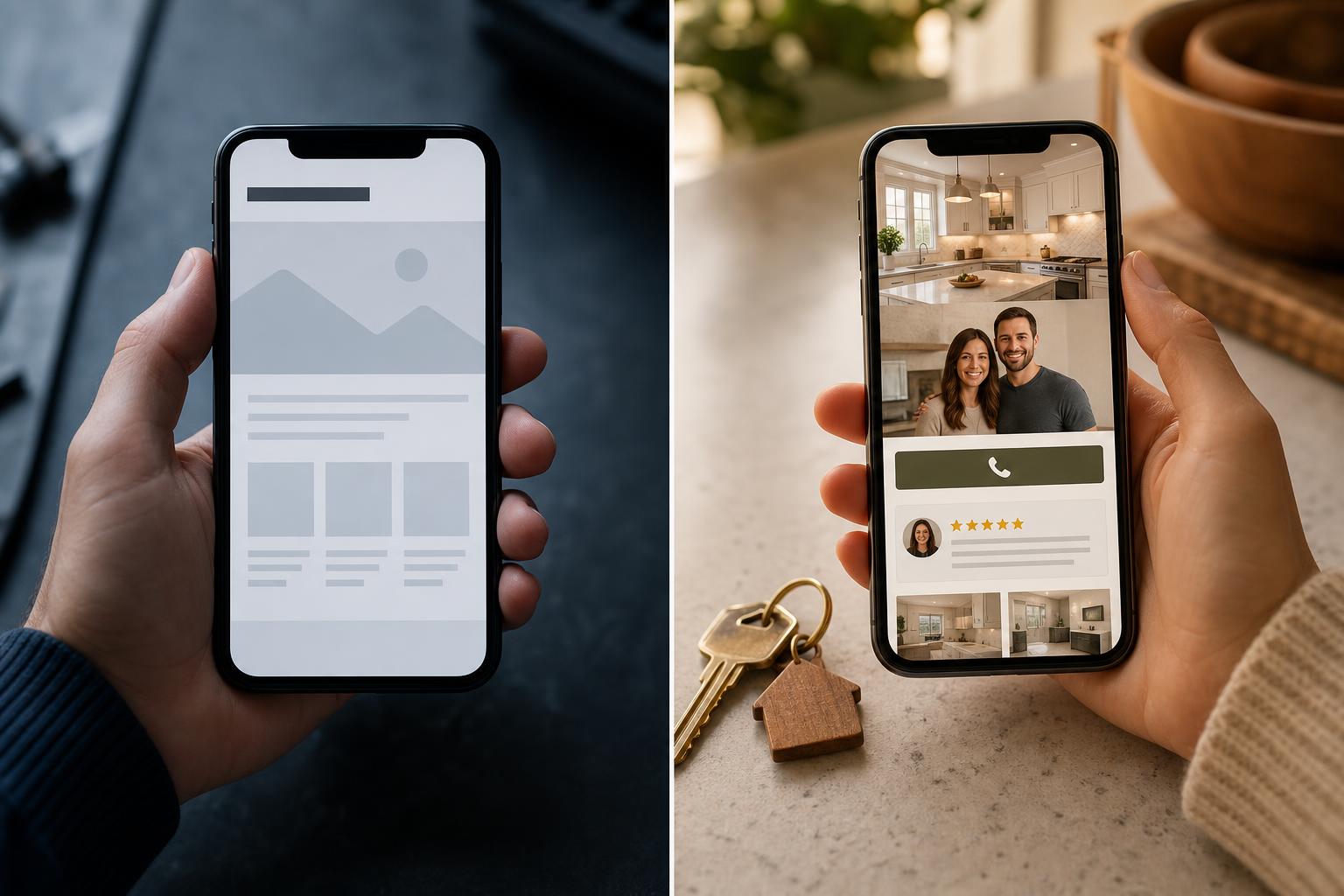
Most local service websites are built like brochures. They list a few services, show a phone number, add a contact form, and hope visitors take action.
That is not enough.
A homeowner looking for a plumber, roofer, painter, cleaner, or HVAC company is usually trying to answer a short list of questions quickly:
- Do you handle my problem?
- Do you serve my area?
- Can I trust you?
- How do I contact you?
- What happens after I reach out?
If your site makes people hunt for those answers, many will leave and call the next business in the search results.
A good-looking website can still lose leads when the service list is vague, the phone number is hard to find, the form asks too many questions, the mobile experience is slow, or the business gives no proof that it handles the type of work the visitor needs.
The most common issue is unclear service positioning. "Home Services" or "Quality Work You Can Trust" does not tell a buyer whether you repair water heaters, install mini-splits, remove junk, clean move-out properties, or handle commercial painting. Your core services should be obvious within seconds.
The next issue is weak local relevance. A customer in Gilroy should not have to guess whether your company works in Gilroy. Your service area, major cities, and service details need to be clear. This is useful for buyers and gives search engines stronger context around where your business operates.
Trust is another major gap. Buyers are making a decision before they contact you. They look for reviews, project photos, years in business, insurance or licensing information when relevant, clear business information, and a simple explanation of what happens next.
A stronger website does not need to be complicated. It needs to remove uncertainty. Make the service clear. Show the area you serve. Add proof. Keep the call button visible. Give visitors one straightforward way to request a quote.
Your website should not make people think harder. It should make contacting you easier.
- Search
- Service Page
- Trust Proof
- Call or Quote Request
- Fast Follow-Up
Common failure points: vague headline, weak local signals, missing proof, buried CTA, slow response.
Keep reading
Why a Website Redesign Is Not the Same Thing as a Local Growth System
Visual improvements matter, but a site that looks newer can still be weak at getting found, building trust, and converting inquiries.
Read ArticleWhat Local Service Businesses Need From Their Website, Google Profile, and Follow-Up System in 2026
Local growth is not one tactic. It is the connected system that takes a buyer from search, to trust, to contact, to a booked job.
Read ArticleThe 90-Day Local Growth Plan for a Service Business That Relies Too Heavily on Referrals
Referrals are valuable, but they are unpredictable. A stronger local growth plan gives your business more than one path to demand.
Read Article